

Ctrl Shift Stress
Stress Tips for Mamas during a Pandemic
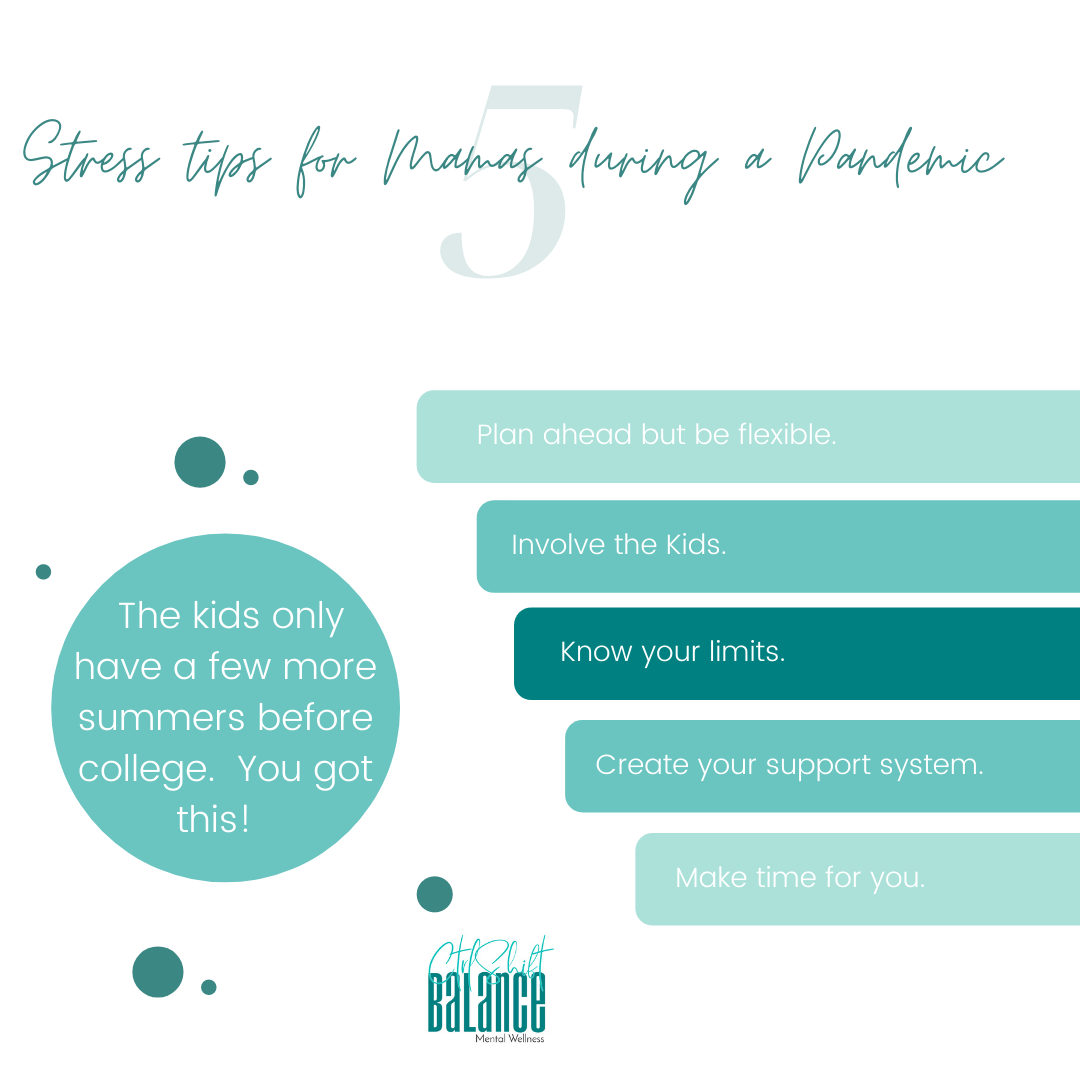
Being a full time working parent is common today, but that doesn't mean it's easy. Many mamas are experiencing dangerous levels of stress, and they don't see any way around it. As for myself, I’m a military spouse and with my husband’s career, I may feel like a one parent operation for days, weeks or months at a time. Then add a pandemic on top that can really increase the stress levels to a new height. So let’s talk stress management for the working mama during a pandemic.
Let’s be real, chronic stress is harmful to your body, mind and spirit. As a parent, you need to find positive ways to deal with the stress so you can be healthy for both your children and yourself.
With a little bit of planning, help, and effort, you can juggle being both the parent and provider of your family.
Here are some tips to help you combat the everyday stresses of being a mama:
1. Plan ahead. The best thing you can do when you're a mama is to plan ahead. You'll find that the simple things in life that often cause the most stress can be managed or outright eliminated when you plan ahead.
* Prepare meals in advance and freeze them until you're ready to use them. Or utilized a meal planning service, Hello Fresh has been a life saving in creating quick (20 min) meals.
* Have everyone put out their clothes the night before and their shoes by the front door so getting the day started will be a breeze.
2. Involve the kids. You can't do everything by yourself, so get your kids involved in getting things done. Any help that your kids are able to contribute will save you a lot of time and stress each day, plus it's teaching them the importance of responsibility and contributing to the family.
* Teach them age-appropriate tasks like cleaning their room, doing laundry, making the grocery list, planning meals, cooking, taking out the trash, vacuuming, cleaning the bathrooms, and so on.
3. Know your limits. When a friend, co-worker, or family member asks something of you that you know you can't do, say no. It may not make the other person happy, but knowing your limits can help you from being overworked unnecessarily.
* If you don't respect your time, who else will?
4. Create a support system. When you have people that you can turn to, you'll be able to release stress in a positive way. When you need a bit of reinforcement, it helps to know you can pick up the phone and call in backup!
* Your support system might consist of family members and friends who are willing to listen to you vent or even help you around the house.
5. Make time for yourself. Schedule at least 10 to 15 minutes just for you into each day. This time can even be for something simple, like painting your fingernails, taking a hot bath, or reading for pleasure.
* Your alone time will refresh and revive you!
These are all very simple, yet effective, ways to deal with the stress of being a parent during this era. These tips won't do away with stress altogether, but they'll help you manage it in a way that will allow you to get things done and enjoy your life and kids.
You only have so many summers before the kids are off to college, and you don't want to waste these years in a stressed out daze. Instead, take advantage of the here and now by incorporating these stress management tips into your life. It's can be easier than you think with a plan in place!
Imagine 90 days from now and you see yourself less stress & more balanced. Which tip(s) did you implement that helped you in reach your goal of feeling less stressed?
Would you like assistance in reaching that goal, I invite you to schedule a free up to 15 min consultation.
Be Well & Balanced,
Shayla Peterson, LCSW

Ctrl Shift Negativity

“Your living is determined not so much by what life brings to you as by the attitude you bring to life; not so much by what happens to you as by the way your mind looks at what happens.”yourself to find the silver lining in a situation, your negativity will dissipate”. -Khilal Gibran
Some of us, even though we may not know why, are focused on the negative aspects of life. Do you notice more of the not-so-good elements of your existence rather than focus on the great things happening around you?
Or you might find yourself being negative in certain situations, like only when you’re with your brother or your spouse’s family. Consider the situation that’s triggering your negativity. If you’re consumed with it, then you’re not noticing the positivity and brightness around you.
Apply these tips when you recognize you’re thinking negatively:
1. Stay in tune with yourself. Are you often disagreeing with others or bringing others down by your negative comments? Watch what you’re saying to others. Reflect on the reason you might want to bring this negativity.
2. Ask yourself, “why.” What are the reasons you’re being negative in the situation? Are you actually a bit envious of your brother because he’s doing so well financially? Maybe you didn’t really feel like visiting your in-laws so you’re directing your negative feelings toward your partner at the moment.
‣ When you figure out whether your negativity is situation-related or maybe because you’re just not feeling well this day, you’re in a better position to take some steps to control it.
3. Tell yourself to stop the negativity now. Although it sounds overly simple, you’re the only one who can truly decide to stop these thoughts. If it will help, visualize a red octagonal stop sign in your mind’s eye. Focus on the stop sign to arrest those negative thoughts.
4. Recognize. Rarely does anything positive come from your negativity. Plus, those thoughts stand to make you feel worse about whatever situation you’re in.
‣ When you can say to yourself, “My attitude’s not helping anything,” it shows you recognize the impact of your negativity on yourself and others.
5. Challenge yourself. When you’re in a situation that typically triggers your negativity, focus on finding the positives. You may be surprised at what you discover.
For example, if you have only tepid feelings about spending time with your in-laws, decide to discover something positive about them next time.
‣ Maybe you share a love for the same type of music or your mother-in-law loves Marlon Brando movies just like you do. When you challenge
‣ For example, if you have only tepid feelings about spending time with your in-laws, decide to discover something positive about them next time.
‣ Maybe you share a love for the same type of music or your mother-in-law loves Marlon Brando movies just like you do. When you challenge yourself to find the silver lining in a situation, your negativity will dissipate.
Only you have the power to flip your world from darkness to brightness. Simply by refusing to take the route of negativity, you’ll discover the magic of your personal strength. When you leave the negative behind, you’ll discover nothing but positive waiting for you. That’s when you know you’ve taken control of your thoughts in the strongest sense.
Would you like to start working on reducing negative thoughts, let’s chat and schedule today.
A companion journal to working on coping with negative thinking is Hey Sis : 40 days of self reflection and encouragement, purchased here.
Be Balanced & Well,
Shayla Peterson, LCSW
Ctrl Shift Move

Let’s talk about moving.
Relocating is a stressful experience for anyone. Of all domestic moves, 85% of Americans move within the same state, and 15% move across states. Even if you are just moving within your state, the process of packing, organizing, and selling/buying a home is a lot to handle.
When you think about moving, what comes to mind? You likely picture piles of boxes, trucks, and sorting through years of accumulated items. Of course, these are all a part of the relocation process. However, emotional support is also an important component of this transition.
Moving involves changing your core community and local support system. You may experience feelings of grief as you think about the people you are leaving behind. It is critical to prepare emotionally for this transition. Here are three questions to ask yourself in the process.
1. Have I planned enough time to say goodbye to friends and family?
Time fills up exponentially when you are planning a move. However, make sure you have enough room in your schedule to spend quality time with the people you are leaving. It is nice to have closure and to be able to talk out the details of your move with friends and family. This includes planning when you can visit each other again!
2. What am I excited about for my new life?
Why are you moving? Are you relocating for a job, family matters, or a change of scenery? No matter the reason, make it a point to have tangible things you look forward to in your new home. Maybe there is a cute cafe in your neighborhood or a new hiking trail to try. Make a list of places you want to explore, and let yourself be excited!
3. Have I asked for help?
Moving is hard, there's no getting around it. The process is made much easier when you have people to help. Don't be afraid to ask for help with packing, making meals, or cleaning.
There are so many moving part during a move, it’s not a time to neglect your emotional health and mental wellness. If you have a upcoming move or transition, let’s connect and create a emotional wellness plan for you today.
With Balance & Wellness,
Shayla Peterson, LCSW, LISW-CP

Ctrl Shift Impostor

Dealing With the Present with Impostor Syndrome
Your past, beliefs, and basic personality have led you to where you are right now. Dealing with these things allows for the possibility of making changes now. Impostor Syndrome won’t go away easily.
Once the past and your natural tendencies have been addressed, it’s time to address the present with these strategies:
1. Acknowledge the challenge of Impostor Syndrome in your life. This isn’t an easy challenge to overcome, so it’s important to recognize that it’s causing issues in your life.
● List all the ways Impostor Syndrome is making you miserable.
● List all the ways this issue is holding you back and limiting your life.
● List all the ways your life would be enhanced if you could work through it.
● How much happiness is it costing you?
● How much money is it costing you by limiting your employment opportunities?
2. Draw attention to your successes. Recognize your role in your success. You weren’t successful just because you were lucky or knew the right people. Recognize your contribution to all the great things you’ve done.
● You might need to enlist the help of friends and family for this. Ask them to list your positive traits.
3. Learn to like criticism. Most criticism can be helpful if you have the proper perspective. Each time someone offers a suggestion, you might be getting a great piece of advice.
● Not all criticism is given with positive intentions, but that’s just life. Some people are just negative like that.
4. Redefine failure. Failure is only a temporary condition. It’s stepping stone to achieving your goal. Some things require a few tries. Sometimes you’ll take the wrong approach and need to make a few changes.
● Imagine you made chocolate chip cookies and discovered that you didn’t add enough chocolate chips. Would you break down and wallow over what a wretched chef you are? No, you’d just alter your recipe and add a few more chips next time. Failure is that simple.
5. Learn to let go of the need for external validation. This is a tough one, but a fully actualized adult can work for nothing other than their own validation. You’re not a child anymore. You shouldn’t need someone to be in awe of every little impressive thing you do.
6. Learn to override your feelings. Uncomfortable feelings stop us from all sorts of things, like sticking with a diet, going to the gym, asking someone for a date, or applying for a job.
● The discomfort caused by Impostor Syndrome isn’t a literal set of shackles that immobilize you. You can override those uncomfortable feelings and go on to do what you intended to do. It just takes a little determination.
Dealing with your past and your tendencies is a huge step in the right direction. However, there is the present set of challenges to clear up, too. When you’ve approached the world a certain way for an extended period of time, you develop habits. Habits won’t vanish just by resolving childhood issues. Resolving those issues makes change possible.
With Balance & Wellness,
Shayla Peterson
Join the wait list for therapy in January 2021.